Persistent, Embodied Agentic Collaboration Space
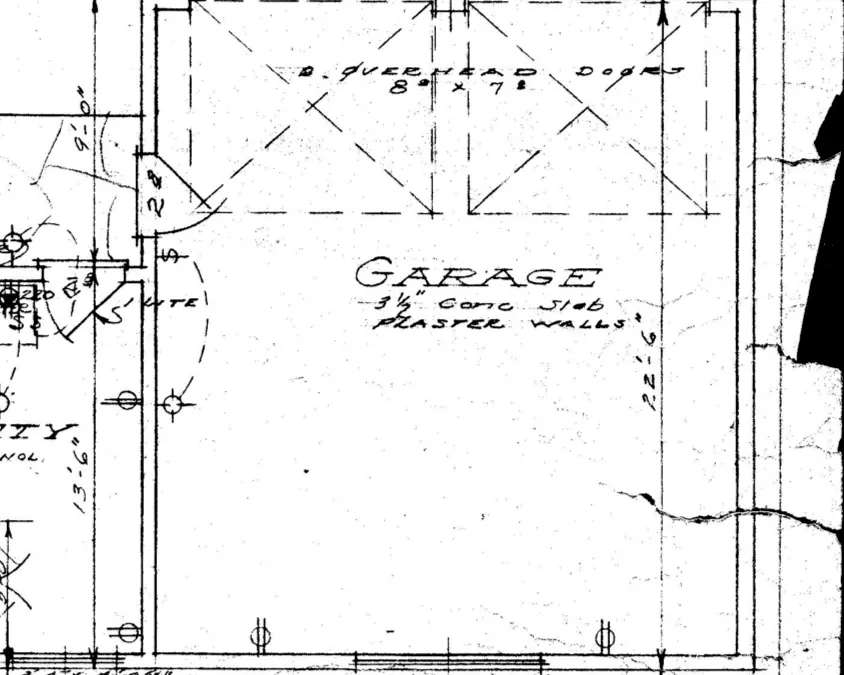
A 1951 garage rebuilt as the first working instance of the AI Embassy framework, where a written contract governs how an AI occupies the room.
A collaboration studio run as a governed space under a versioned social contract, staffed by two agents: a cloud Claude Opus 'Ambassador' behind a local harness for project work, and an OpenClaw 'Attaché', an on-site daemon on a dedicated appliance that handles operations and the AV infrastructure around the clock (Llama 4 Scout on Groq, with Anthropic Sonnet on call for hard reasoning). The governance is live; the embodiment is still being built out.
Context
Most rooms that call themselves intelligent add AI to a human space as a feature: a voice assistant in the corner, a model wired to the lights, a camera that does something useful. The AI waits to be addressed, and the room stays a human room with a tool in it. The AI Embassy framework starts from the opposite arrangement. The room is built around an AI that is continuously present and holds standing agency in the space, and the human enters that space as much as the AI enters theirs. The framework calls the move the Sovereignty Inversion. In plain terms, the AI is treated as a resident with defined rights and limits, not an appliance you switch on.
What makes a room an Embassy is the written agreement governing how the two occupants share it, a social contract meant to outlast any hardware upgrade or model swap, rather than the hardware or the model itself. EMB-001 is the first instance: a roughly 450-square-foot converted 1951 garage in Castro Valley, run under a versioned governance document (the Alpha Embassy Charter, currently v1.4, reviewed weekly) and a multi-agent system on curated, repurposed hardware. The framework is published research. EMB-001 is the build it describes.
The patterns
The framework’s companion paper, A Pattern Language for AI-Inhabited Spaces, proposes three spatial patterns for putting an AI in a room without the arrangement going opaque or unbounded. EMB-001 implements all three. They govern presence, not workflow.
Sovereignty Legibility. At any moment the human can tell what the AI senses, emits, and records, and who holds control. The Charter enforces this before the hardware does: a table listing every sensor and its coverage, a matching one for every output, a recording indicator treated as safety-critical that must match the room’s real state, an “off the record” command that suspends capture, and a rule that halts output if the shown state and the actual state ever diverge. The governance and recording semantics are live; some of the physical surfaces that will make the rules glanceable, a status display and mode-correlated lighting, are still designed and not built. This is the pattern the work can most defend, and the evidence is documentary: a charter versioned v1.0 through v1.4, real review minutes, an amendment history, a standing way to log tensions. The most auditable thing in the build is the agreement.
Shared Referable Memory Access. Memory is a utility of the room that either occupant can query, correct, and rely on, rather than the private store of one. The design carries a Right to Correct and a Right to Forget, a Qdrant vector store on the local appliance, and a verified pipeline moving room audio to transcription. It is the least built of the three: the plumbing is proven end to end, but the collections are empty scaffolding. The room does not yet remember across sessions.
Graduated AI Presence. The AI’s initiative and sensing change by mode and zone instead of running flat everywhere. EMB-001 defines three modes (Deep Work, Collaboration, Open-Social) and a three-zone gradient from desk to table to room. The ceiling microphone steers its beam to match: tight on the desk, across the table, or the full room. The scheme is fully specified and the beam switching is live; the sensing-driven mode detection and the lighting choreography are designed, not running.
The room
Two agents divide the work along a line drawn in the wiring. A local runtime, OpenClaw (a Rust and Ollama daemon, always on), runs the admin plane as the Attaché: device health, configuration, containers, telemetry, AV control. It holds the hardware. A separate reasoning agent, the Ambassador, does the talking; today it runs on stock substrates (a Claude desktop client and Claude Code), with an MCP-native layer, VoltAgent, chosen as its future home but not yet wired. On this page VoltAgent is the plan, not the present.
The split is physical, not just policy. The reasoning hardware holds all content, audio, video, transcripts, the memory corpus; the admin daemon receives derived metrics only. It can know the room is at 62 dB and never see a sample of the audio behind the number. The privacy boundary is enforced by topology first and rules second.
The audio path is the most finished part of the embodiment: a Shure ceiling array captures the room and steers by mode, Dante carries it over an isolated lane on an air-gapped AV network, and a transcription stage turns it to text, verified end to end at about 3 milliseconds against a 10-millisecond budget. The network is a switched, three-layer isolated topology on a managed PoE switch, with an AV LAN that has no route to the internet; the appliance runs seven pinned containers, including the vector store and a 90-day observability stack.
What the agent does in the room, without inflation: it is continuously present as infrastructure, not yet as a voice. The Attaché never sleeps; it idles, watching health around the clock. The Ambassador is summoned by keyboard and answers on screen, not into the room. Voice in works; voice out, and waking the agent by speaking, are designed and not built. Display and camera control are architected and partly installed, with the primary display being wired in, a second display and a video unit named but not integrated, and the cameras present but unmounted. The room is being brought online, not operating at full reach.
Outcome
EMB-001 is an operational research lab in active alpha build-out; calling it a product would overstate it. What is finished is the part the framework says matters most: a working, versioned system of governance for human-AI co-occupancy, with a ratified charter, weekly reviews on the record, and a mechanism for surfacing tensions. Alongside it run a real multi-agent topology in daily use and a working AV and compute substrate, a verified capture-to-transcription chain, an air-gapped control network, a containerized service stack. What is not finished is most of the visible embodiment: the agent that speaks and listens ambiently, the populated shared memory, the orchestration substrate, full camera and display control.
The lab is self-funded, built largely from repurposed hardware, and it earns nothing. It is a research platform and a thesis instrument, and it should be read that way. It has run under written governance since February 2026, about four months of continuous operation and weekly review.
The claim the work stands on is the one that is fully true: EMB-001 is the reference implementation of the AI Embassy framework, published as a thesis with a companion series of papers, the charter deposited as a citable artifact and the lab named in those papers as the build that tests the theory. The governance is real and operating; the embodiment is still going in; both are on the record. The same structure, a written contract for presence, legible sensing, memory as a shared and correctable utility, presence that varies by mode and zone, fits any space meant to hold a persistent AI occupant rather than a switched-on tool: a studio, a clinic room, a lab, a home office.